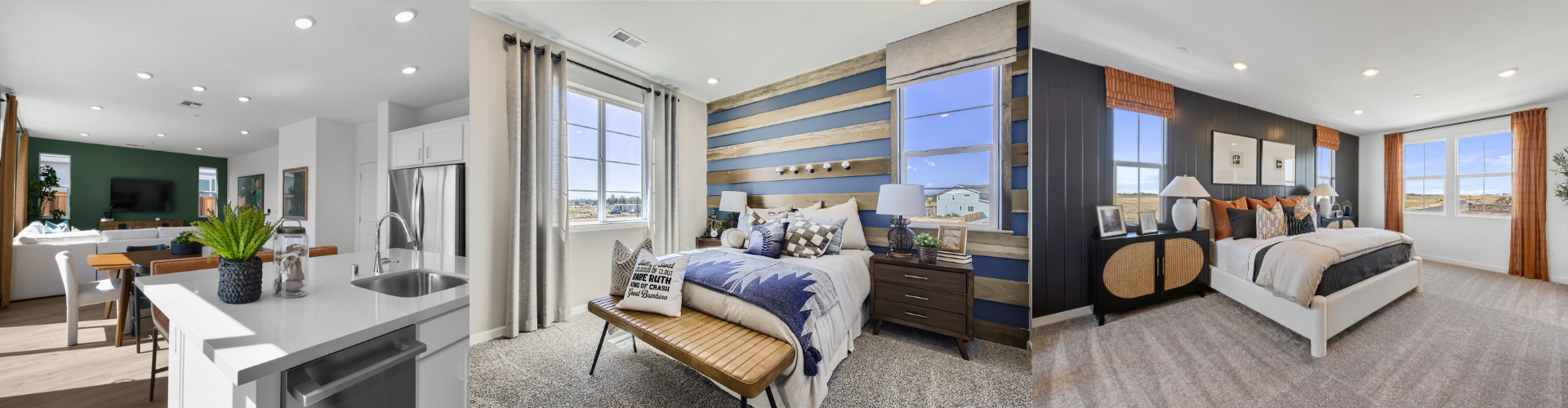
Somewhere in your house, a blank wall is bored and ready for a glow-up. An accent wall is one of the easiest ways to bring color, texture, or warmth into a space you already love. Whether it's a bold paint color, a wood panel feature, or a textured wallpaper, the right accent wall can turn an ordinary room into the one guests remember.
Are Accent Walls Still in Style?
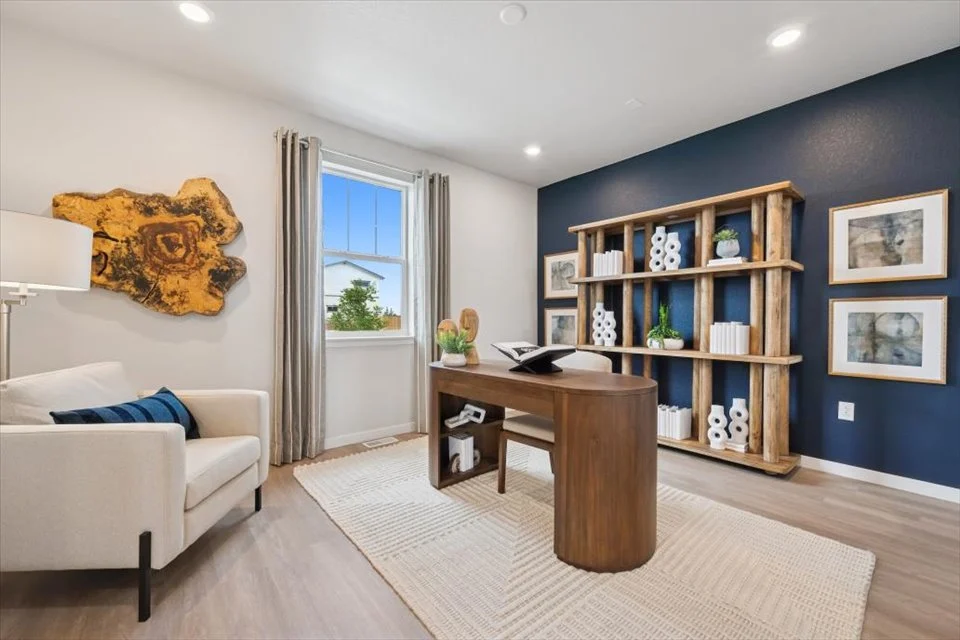
Design trends move fast, but the accent wall has stuck around because it solves a real problem: most rooms need visual interest without visual chaos. Instead of committing to one bold color or material across four walls, an accent wall lets a homeowner make a statement on a single surface while keeping the rest of the room neutral and flexible.
How to Choose the Right Wall
If you're weighing whether an accent wall makes sense for your home, we broke down how to choose a wall, where it works best, and a few ideas to help you picture the possibilities.
Not every wall is a good candidate for accent treatment. A few questions can help narrow it down.
- Where does your eye land first? The wall you notice when you walk into the room is usually the strongest choice.
- Is there a natural focal point? A wall behind a bed, a fireplace, or a built-in bookshelf gives the accent something to anchor to.
- Does it get natural light? Darker colors and richer textures often read best on a wall that gets some daylight, rather than one in a dim corner.
Living Room Accent Wall Ideas
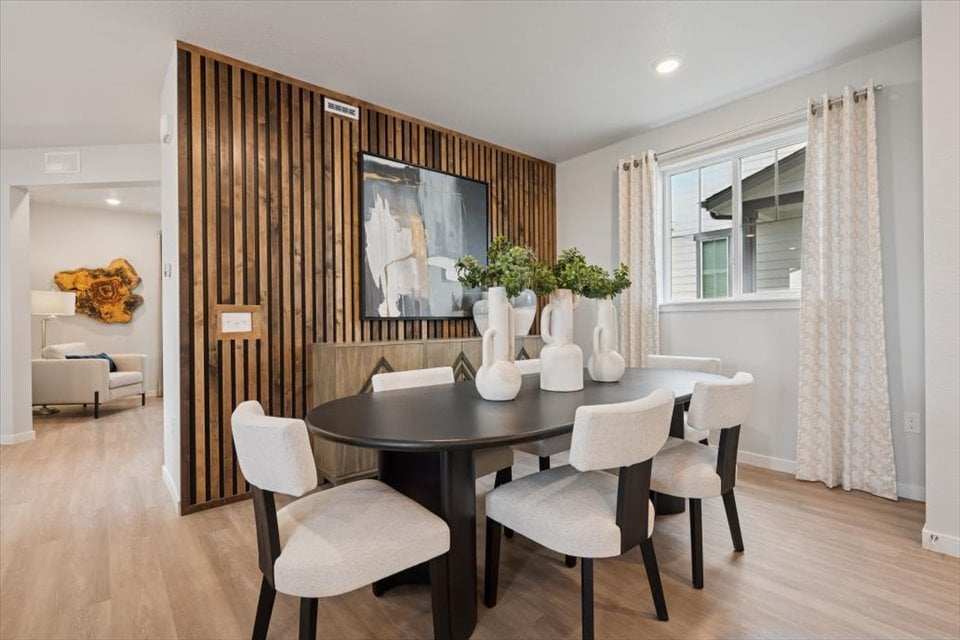
Wood paneling. A wall of vertical wood slats or shiplap adds warmth and texture, and it pairs well with both modern and traditional furniture.
Bold paint color. A deep, saturated color—think forest green, navy, or terracotta—on a wall creates contrast against lighter walls and furnishings.
Bedroom Accent Wall Ideas
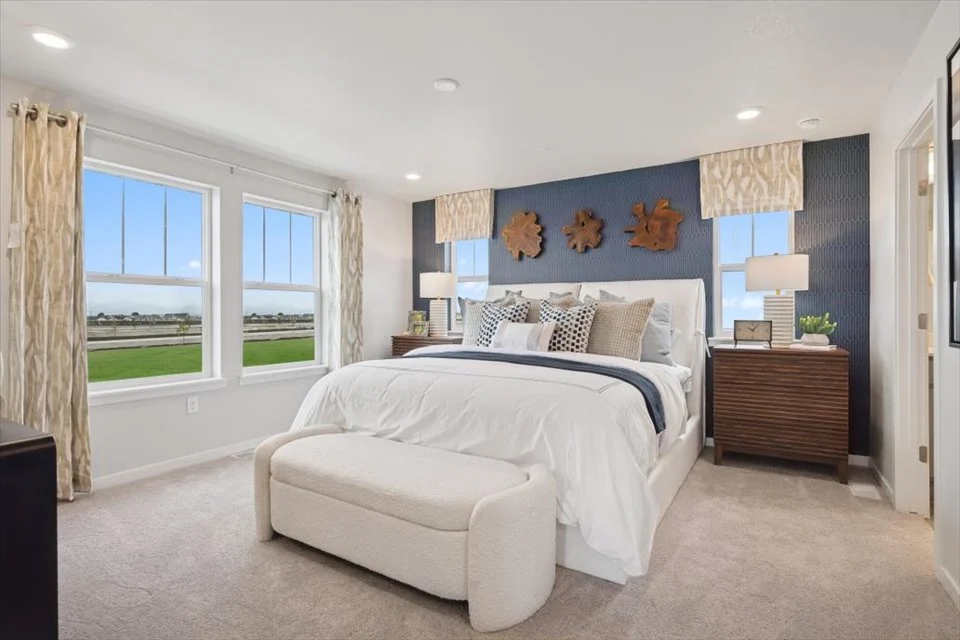
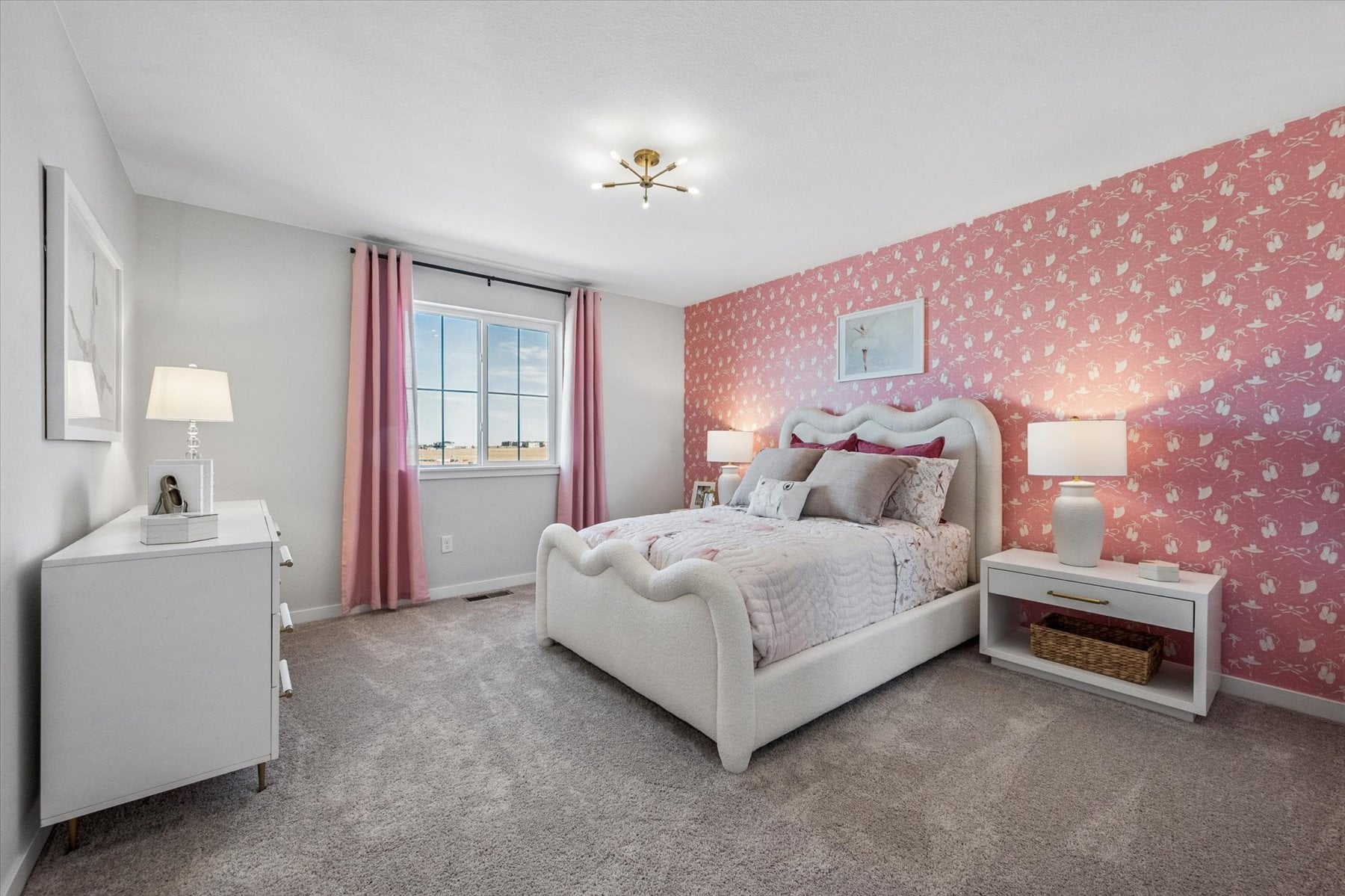
Wall behind the bed. This is the classic placement, and for good reason: it frames the headboard and becomes the visual anchor of the room.
Textured wallpaper. Grasscloth, subtle geometric patterns, or soft botanical prints add dimension without the intensity of a bold color.
Two-tone paint. Pairing a soft, muted color on the accent wall with a lighter neutral on the remaining walls creates contrast that still feels calm.
More Accent Wall Materials to Consider
Beyond paint and wood, a few other materials are worth knowing about before you commit.
Wallpaper. Pattern and texture options have expanded well beyond traditional florals, and peel-and-stick versions have made this a more approachable DIY project than it used to be.
Printed vinyl decals and wall wraps. For homeowners who want a custom look without committing to paint or paper, printed vinyl offers a flexible middle ground. Wall wraps can replicate anything from a mural-style landscape to a geometric pattern, while decals work well for smaller accents like a single motif or a repeating shape. Both install without the mess of paint and typically remove cleanly, making them a low-risk way to test a bold design.
Check out our article on wainscoting if you already have your heart set on that particlular look.
Accent Wall FAQ
What is an accent wall?
An accent wall is a single wall in a room that uses a bolder color, a distinct material, or added texture to create a focal point.
Which wall should be the accent wall?
The wall that naturally draws the eye when entering the room is usually the best choice.
How do I paint an accent wall?
Choose the wall, tape off adjacent surfaces and trim, apply primer if switching from a dark to light color (or vice versa), and use two coats of paint for full, even coverage.
What color accent wall goes with gray?
Gray is a flexible neutral that pairs well with deep blues, warm terracottas, and forest greens, depending on the mood a homeowner wants to create.


